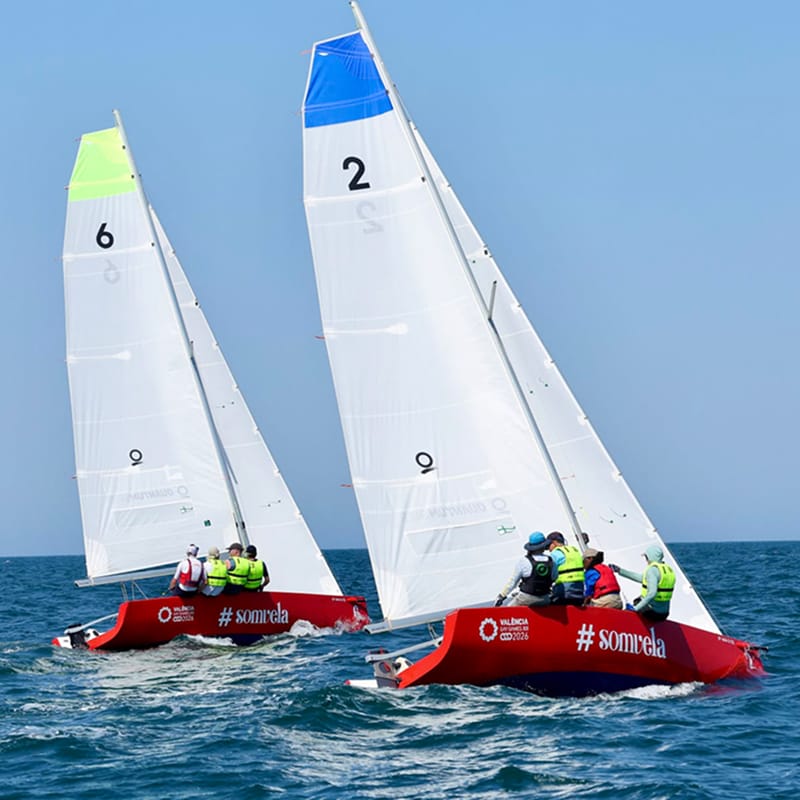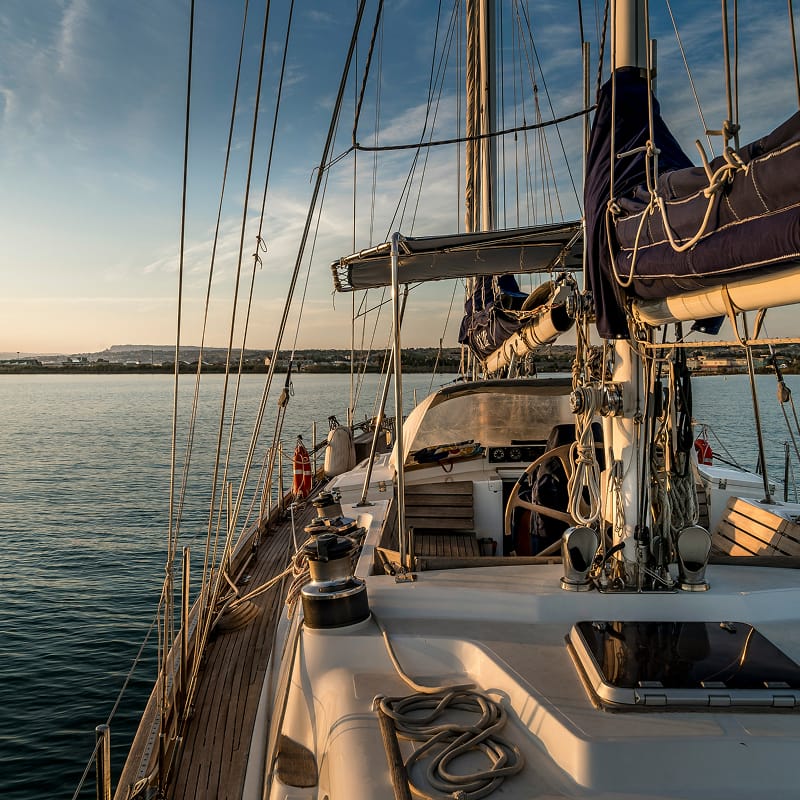
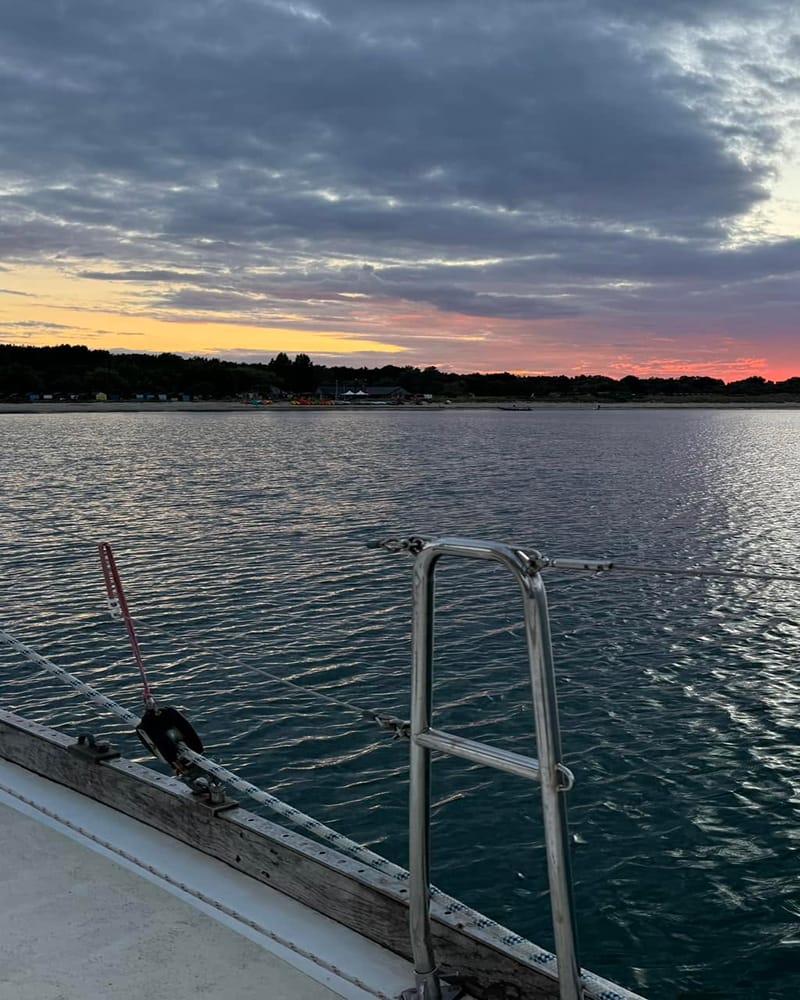
Aboard their Gulfstar 50 ketch Odyssey, the author and Jose sail a two-week, 750-mile cruise from Poole to South Brittany, taking in Roscoff, L'Aber Wrac'h, the River Vilaine, Concarneau, Houat and the beautiful Glénan Islands.

I was first introduced to the delightful cruising areas of South Brittany many, many… oh so many years ago by the late Brian Stewart (née Read!) of this club, whom I accompanied as crew on his gorgeous Nicholson 476 Zulu for one of his annual three-week pilgrimages after Cowes Week. I was instantly smitten by the variety and beauty of this stretch of coast, and have made every effort over the years to return regularly – first on my Rival 34 Flogg, and subsequently on Odyssey, our Gulfstar 50 ketch. I was delighted that Jose also fell in love with the area, and he is always happy for us to embark on the fairly long slog from our base in Poole, as it is most definitely worth it.
This July we set off on a two-week cruise which isn’t really long enough to do it justice, but Odyssey can cover the miles quite comfortably and we’ve worked out an itinerary that gets us there and back reasonably quickly. We like a mix of marinas and anchoring, generally lying to our own tackle two nights out of three, which saves money and also allows us to visit some delightful and often uncrowded spots, even in peak season. Our bible for this is the book Secret Anchorages of Brittany by Peter Cumberlidge, which offers concise and accurate pilotage notes for navigating into what sometimes appear to be the most unlikely of safe havens. It also includes plenty of interesting background information and history of the area, and I highly recommend it as a supplement to the usual guides.
Since Brexit our first port of call on this route has always been Roscoff, which at a distance of nearly 150 miles from Poole involves an overnight passage. This year we motored most of the way across the Channel with little or no wind, but it picked up as we approached Guernsey and developed into a force six to seven almost on the nose. This made for an uncomfortable night of motor-sailing, but we made very good progress and were tied up in Roscoff marina in time to obtain fresh croissants for breakfast to give us the energy to face the formalities of entry into the EU. This is why we choose this routing, as Roscoff has a large marina accessible at all states of tide and next door to the ferry terminal, where we got our passports stamped, leaving us the rest of the day to get some rest before heading into the delightful old town for shopping and dinner.
We set off again the next morning into a largish swell and not much breeze, which made for fairly rolly motor-sailing, but the wind picked up steadily until, once again, it was a westerly six to seven on the nose. This rather scuppered our plans to continue towards Ushant and the Chenal de Four, and with better weather forecast for the next day we decided to drop the anchor well upriver of the marina at L’Aber Wrac’h, where it is wonderfully sheltered whatever is happening out in the Channel. You can also anchor in the lower reaches of the estuary, but we prefer to carry on further up to where the river narrows between wooded banks and there are several spots with room to swing between the moorings which line either side of the channel. We enjoyed a very peaceful night there, and I loved watching a large colony of egrets roosting in the trees nearby as they hopped from branch to branch for a catch-up and gossip with friends and family.
Sure enough the wind had eased as we set off at dawn the next morning, and we made good time, with a fair tide sweeping us along the rugged coast of north-west Brittany until we rounded the corner into the Chenal de Four, which separates the mainland from the off-lying island of Ushant. Generally on this route it’s nice to stop somewhere for the night in the Rade de Brest, but we wanted to press on, so continued south as the tide turned against us until we reached Pointe du Raz, where, once safely through the notorious Raz de Sein, we pointed our bow east-south-east. We crossed the border into South Brittany in unseasonable murk and drizzle, which thankfully cleared as we dropped the anchor at dusk in a little bay in the mouth of the River Odet at Bénodet, where we celebrated our long passage of 86 miles with a bottle of something suitably bubbly.
We then had a week to explore these delightful cruising grounds, although time precluded entering the renowned Golfe du Morbihan on this trip. This is an inland sea dotted with islands and picturesque villages, and is well worth visiting, although the tidal currents run fiercely in the narrow channels, which can be crowded with leisure boats and ferries, so you have to keep your wits about you. You can take the tide all the way up the canal to Vannes at the head of the Golfe, where you can tie up right in the old town centre and enjoy the usual Gallic pleasures of good food, cheap wine and stunning architecture.
Anyway, that wasn’t on our itinerary this time, but we made it all the way into the Bay of Quiberon, through the barrage at Arzal (touching bottom on a rising tide in the estuary) and well inland up the beautiful and very peaceful River Vilaine. I love this place, and my preferred anchorage is about an hour upstream of the busy port of La Roche Bernard. At this point the wooded slopes lining the banks melt away into flat farmland, with the river winding in lazy bends through the placid French countryside. It feels a million miles from the open sea and is a wonderfully relaxing location to spend a night or two, surrounded by nothing but grazing cows, the occasional splash of a fish jumping, and, as dusk settles quietly over the fields, the owls hooting eerily in the trees lining the riverbank. Pure bliss!
Another highlight of the trip was a night in the beautiful old port of Concarneau. Being a popular place in peak season, the marina can get very busy here and it doesn’t have a lot of visitor berths for vessels of our size, so we’ve learnt the trick of calling ahead in the morning and getting there by midday to ensure a space. This worked a treat, and we were soon moored in the shadow of the impressive ramparts of the old walled town, which juts out into the harbour on an island connected to the main town by a stone bridge. We love this place and spent a very pleasant afternoon exploring, resupplying both ourselves and Odyssey, and then enjoyed an excellent dinner in the old town. It wasn’t as busy as on previous visits, which made it easier to get a table, as it can be thronged with tourists at this time of year.
In addition to revisiting old favourites we also like to try new places on each trip for a bit of variety, and this time we decided to spend a night at anchor off the southern end of the small island of Houat, which lies between the peninsula of Quiberon and the much larger Belle Île. The pilot book warns of the perils of the vent solaire, which can spring up violently in the night at this time of year, causing havoc and impromptu pyjama parties as boats drag across the bay, so we went to bed with a sense of trepidation, but luckily it remained calm and we slept soundly, rolling gently on the slight swell. It was a busy anchorage but very pretty, and we’d happily come back.
As well as the Vilaine there are a number of smaller rivers along the coast between Quiberon and Concarneau, but most are too shallow for Odyssey – even with our modest 1.8 metre draught – or don’t offer enough swinging room. I had high hopes for Belon, as it looked from the guides as though we might find space to anchor for the night, so we approached on a rising tide and crept in, following the narrow twisting channel between steeply wooded sides. It looked promising at first, with some lovely little sandy coves, but the channel became quite narrow and was densely lined with moorings. We proceeded as far as we felt safe, and there were a couple of large fore-and-aft visitor buoys which we could have tied onto, but they were already occupied and we didn’t fancy rafting. With no space to anchor safely anywhere we reluctantly headed out again and ended up spending the night in a little bay opposite the mouth of the river, which proved to be a perfectly acceptable alternative.
Another highlight came the next day, when we picked our way into the diminutive but stunning archipelago of Glénan, lying a few miles off Concarneau and very reminiscent of the Isles of Scilly, with equally clear water and innumerable white sandy beaches. There is a large inner lagoon surrounded by the islands which is nicely sheltered but very shallow, so we nosed our way in at half tide, trying to find a pool we’d anchored in before, which left just enough depth at low water for us to remain afloat. Luckily it hadn’t moved, and we were soon safely dug in, so took the dinghy ashore for a picnic lunch and snooze in the warm afternoon sun on one of the idyllic stretches of sand. It really is a beautiful place and definitely worth visiting – just be careful with your pilotage, as we saw several boats go aground while we were there.
We were now homeward bound, and once around the Pointe du Raz we called into the port of Douarnenez, which we hadn’t visited before. Given the late evening high tide we didn’t wait for enough depth to get into the inner marina, but there was plenty of space on a long visitor pontoon by the outer marina which, although less sheltered, was fine in the relatively settled conditions and is accessible at all states of tide. We didn’t venture into the main town, as there were enough shops and restaurants near our berth to satisfy our needs, although we had to abandon our first choice of venue for dinner, which was chronically under-staffed. After waiting thirty minutes without being able to attract the attention of the handsome but clearly frazzled solitary waiter, we slipped quietly away and luckily found somewhere else with a rather better staff-to-customer ratio. It seems hospitality in France may also be suffering from the dire labour shortages we are experiencing in the UK at the moment, or maybe we were just unlucky.
Our next night was spent amongst the rocks lining the northern end of the Chenal du Four, once again courtesy of our book of secret anchorages – although perhaps not so secret anymore! There is a small drying harbour at Portsall, and we dropped the hook just outside it in about five metres of stunningly clear water. Jose took to his paddle board to explore the reefs while I snoozed in the cockpit, enjoying the late afternoon sunshine and being rocked gently to sleep by what little remnants of the Atlantic swell managed to work their way up the channel. We were the only yacht here, and attracted a fair amount of attention from the local dinghy sailors as they tacked up and down around us in the gentle evening breeze. We’ve been here before, and it’s a great place to spend the night in sheltered conditions, plus it offers a slight shortcut compared to taking the normal route around the off-lying reefs, as there’s a small inner passage which looks impossibly tight at first glance but is actually fine so long as you’re careful.
And thus our journey approached its conclusion as we called into Roscoff once again to enjoy a final night of French cuisine before stamping out of the EU the next morning and setting off on the final leg towards home. We arrived in Studland Bay around lunchtime the next day and spent a very pleasant twenty-four hours relaxing at anchor there, before finally heading back onto our mooring in Poole Harbour the following day.
Overall it was a successful and very enjoyable trip, and we covered around 750 miles in two weeks, which isn’t bad going. If you’ve never been to South Brittany before, then I highly recommend putting it on your bucket list – we’ve loved all our trips there and are already looking forward to our next visit.
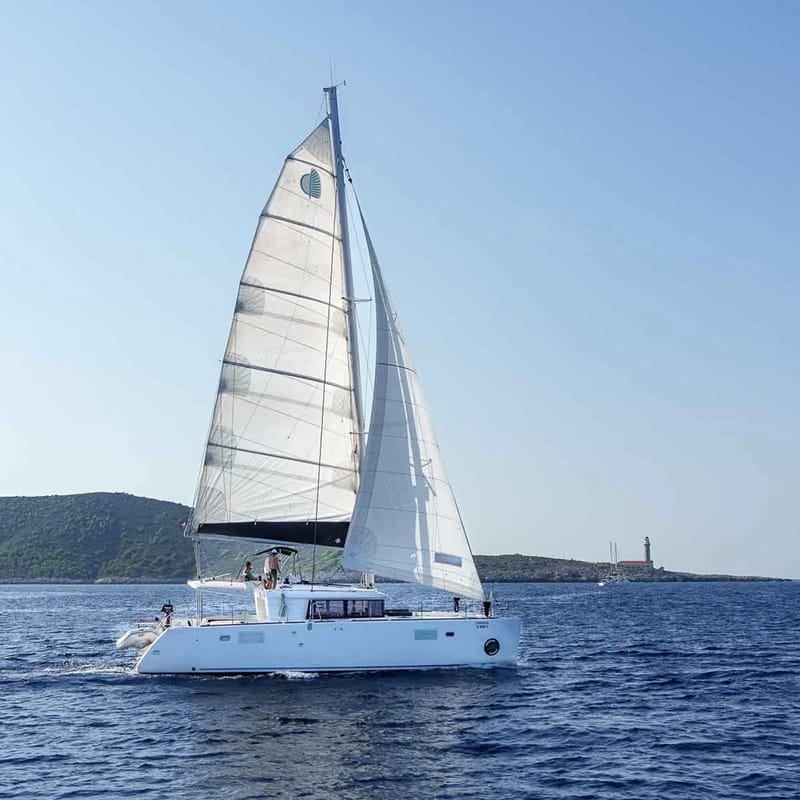
Twenty S&CA members join a five-boat club charter around Croatia's Dalmatian coast, sailing from Šibenik to Trogir, Brač and Maslinica, with UNESCO old towns, seafood dinners, an engine scare, and plenty of Adriatic swimming along the way.
Lorem ipsum dolor sit amet, consectetur adipiscing elit, sed do eiusmod tempor incididunt ut labore et dolore magna aliqua. Ut enim ad minim veniam, quis nostrud exercitation ullamco laboris nisi ut aliquip ex ea commodo consequat. Duis aute irure dolor in reprehenderit in voluptate velit esse cillum dolore eu fugiat nulla pariatur.
Block quote
Ordered list
Unordered list
Bold text
Emphasis
Superscript
Subscript