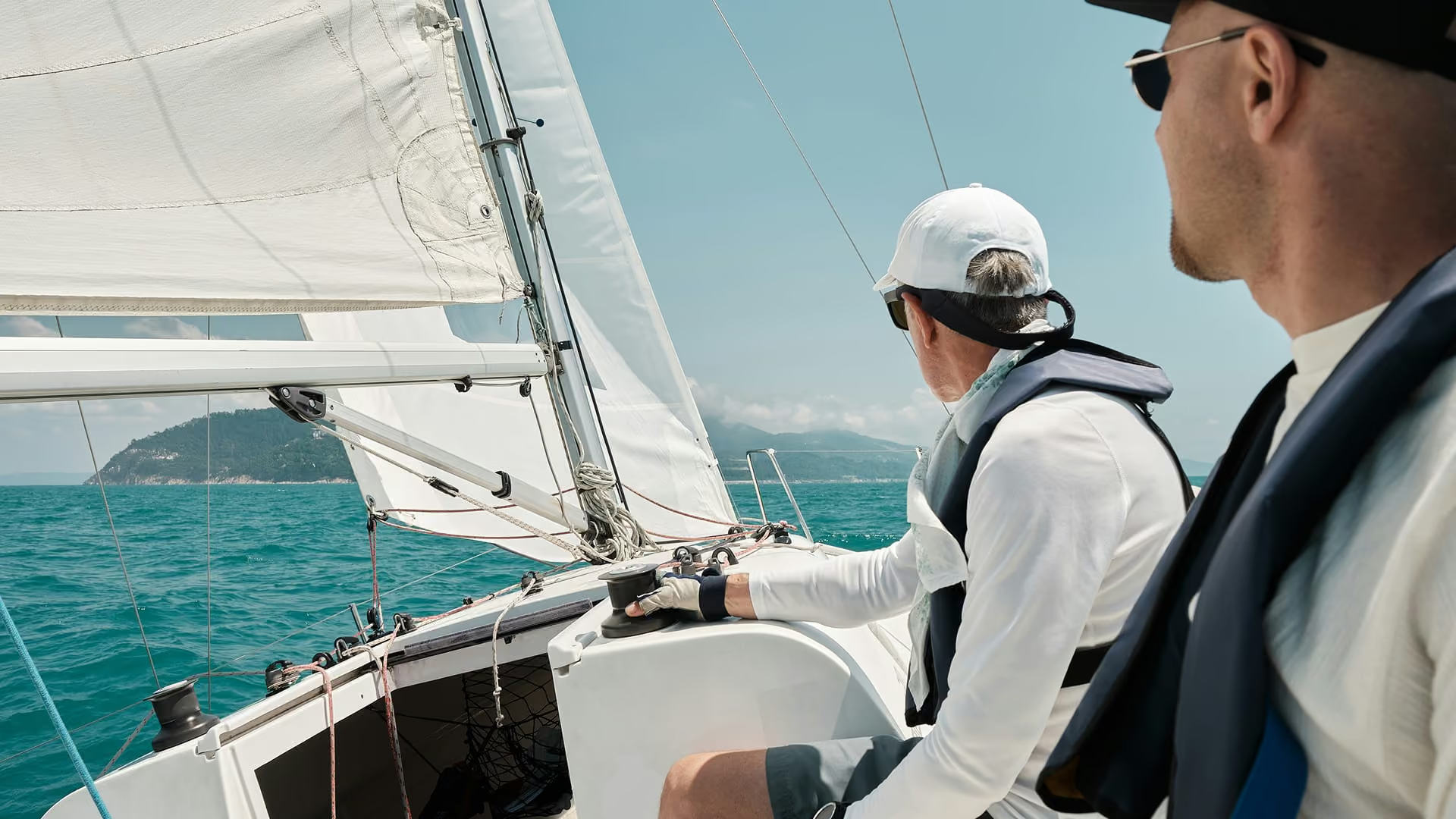
Every skipper started as crew. Many of our skippers are happy to take novice crew out on the water. Just be upfront about your experience before you set sail so they can plan the trip safely. For practical tips on your first trips, our NewsBuoy supplement is a good place to start.
When you’re ready to build your skills, an RYA course makes you a more confident crew member and puts you on the road to skippering your own boat. The pathway below shows how the courses fit together, from your first weekend afloat to a commercial endorsement - choose sailing or powerboating and scroll down to follow the RYA route.
Learn the ropes as crew. No experience needed.
A relaxed two-day taster. Learn to steer, trim the sails, handle ropes and understand basic safety at sea. No experience needed.
Become a capable crew member, taking part in every aspect of sailing, from helming and watch-keeping to anchoring and weather.
Weekend sailing to build logged miles and gain confidence in the skills learnt so far.
Take charge of a yacht on short coastal passages in daylight.
Coastal navigation, chartwork, tides, meteorology, rules of the road and seamanship. Classroom or online.
The licence to operate a marine VHF radio, including digital selective calling, ending in a short examination.
Five days planning and leading short coastal passages in familiar waters by daylight, developing navigation and pilotage.
Further weekends afloat to consolidate the skills learnt and log more sea miles.
A longer five-day trip to practise the preceding courses and log further sea miles.
Night passages, tidal pilotage and longer trips, ending in the Yachtmaster Offshore exam.
The full navigation and seamanship syllabus for coastal passages: advanced chartwork, tidal calculations and passage planning.
Five days of advanced coastal sailing: night passages, challenging tidal pilotage, longer passages and crew management.
Covers the emergencies most likely at sea, from cold shock and hypothermia to resuscitation and serious bleeding.
Classroom and pool. Liferafts, lifejackets, flares, and abandoning a yacht and staying alive until rescue.
Mile building over a longer distance, with passage planning and night sailing.
A full expedition giving extensive practical experience across the whole coastal skipper curriculum.
Assessment of Yachtmaster Coastal and Offshore theory, examined over a full passage.
Most members stop at Yachtmaster. These steps lead to paid skippering.
The route from qualified skipper to paid skipper. Four further steps take an Offshore certificate to a commercially endorsed one.
Celestial navigation, global weather patterns and ocean passage planning, for passages beyond the reach of coastal navigation.
Required for a commercial endorsement. Regulation, safety management, business practice and the responsibilities of a working skipper.
A UK fitness certificate from an approved Maritime and Coastguard Agency doctor, required for work on commercial vessels.
Mandatory basic safety training for anyone working at sea: personal survival, fire fighting, first aid and personal safety.
Learn to handle a powerboat safely and confidently.
The skills and background knowledge to become a competent powerboat driver. Boat handling and seamanship.
Charts, tides, buoyage and safety, the essentials for any boater. One or two days, classroom or online.
Own boat or charter, to practise and build experience on the skills learnt so far.
Coastal navigation, chartwork, tides, meteorology, rules of the road and seamanship. Classroom or online.
Larger, more powerful boats and longer coastal trips.
Builds on Level 2, for those who aim to drive larger, more powerful powerboats.
The licence to operate a marine VHF radio, including digital selective calling, ending in a short examination.
Own boat or charter, to practise the preceding courses and log further sea miles.
The full navigation and seamanship syllabus for offshore passages: advanced chartwork, tidal calculations and passage planning.
Drive a planing powerboat by day and night, ending in the Advanced Certificate of Competence.
Covers the emergencies most likely at sea, from cold shock and hypothermia to resuscitation and serious bleeding.
Boat handling, seamanship, pilotage and navigation to the standard needed to drive a planing powerboat by day and night.
Own boat or charter, to practise the preceding courses and log further sea miles.
Classroom and pool. Liferafts, lifejackets, flares, and abandoning a boat and staying alive until rescue.
A test of skippering ability by day and night in the type of craft covered by the RYA Powerboat Scheme.
Most members stop at Advanced. These steps lead to paid skippering.
The route from qualified skipper to paid skipper. Three further steps take an Advanced certificate to a commercially endorsed one.
Required for a commercial endorsement. Regulation, safety management, business practice and the responsibilities of a working skipper.
A UK fitness certificate from an approved Maritime and Coastguard Agency doctor, required for work on commercial vessels.
Mandatory basic safety training for anyone working at sea: personal survival, fire fighting, first aid and personal safety.
Short courses you can fit in at any point. Several are required along the way, and all of them make you a more useful crew member.